What Are Window Awnings And What Are They Good For?

April 14, 2025

Window awnings typically serve very different purposes from regular awnings.


With regular awnings, the main purpose is usually to provide shade and shelter from the sun and rain for people.


Window awnings, on the other hand, are mainly meant to protect your indoor furnishings from UV rays and enhance your energy efficiency.


As such, window awnings in general don't need to be as large as normal awnings and can be cheaper to install.


Window awnings don't just serve practical purposes though. A lot of times, window awnings can add more aesthetic appeal than regular ones.


The reason for this is that normal awnings are usually just treated as part of your roof, but window awnings tend to be quite noticeable and draw people’s attention well.


If you're considering adding a window awning to your home or business, here's what you need to know.


What Are Window Awnings?


Window awnings are basically just awnings that are installed outside windows.


Their purpose is to keep the sun from reaching your indoor furnishings, so they need to be positioned at an appropriate angle depending on their shape and size.


Other than that, they're not much different from regular awnings, and the same range of materials and colours is available for use.


Why Are Window Awnings Important?


We already mentioned that window awnings are meant to protect your indoor furnishings from UV rays and regulate your temperature, but considering that many homes don't have window awnings, some might question their necessity.


And indeed, window awnings aren't a strict necessity. But they are immensely helpful.


Firstly, constant exposure to UV rays can cause fading and discoloration of your furniture, floor, and curtains. Window awnings prevent that from happening.


Some would argue that you could just close the curtains, but that's not quite the same.


By closing the curtains, you're blocking out most of the light, and your home then becomes dark and gloomy. Window awnings allow you to enjoy a brightly lit home without having to worry about UV damage.


Furthermore, even if you are blocking the UV rays by closing your curtains, the rays still heat up your curtains, and your curtains then transfer that heat to your home.


This brings us to our next point–energy efficiency.


By blocking the sun out, a window awning helps reduce your cooling costs significantly.


Studies by the Professional Awning Manufacturers Association (PAMA) show that awnings can reduce cooling costs by up to $250+ annually.


The U.S. Department of Energy also notes that properly installed awnings can decrease heat absorption by 65-77%, depending on the window orientation.


In addition, window awnings don’t just block out the sun, but rain too, so you can continue to keep your windows open during storms without worrying about the rain entering your house.


This allows your house to remain airy and well-ventilated even during rainy weather, which is an important feature given Singapore’s humid climate.


All things considered, window awnings aren’t a strict necessity, but they protect your indoor furnishings, enhance ventilation, and can help you significantly cut down on your cooling bills, all while not turning your home into a dark and gloomy place like curtains would.


Plus, when done right, they’ll help your home stand out and boost its aesthetic appeal.


Types Of Window Awnings


Now, before we go into the awning materials, let’s go over the various types of window awnings available on the market.


1. Stationary Awnings

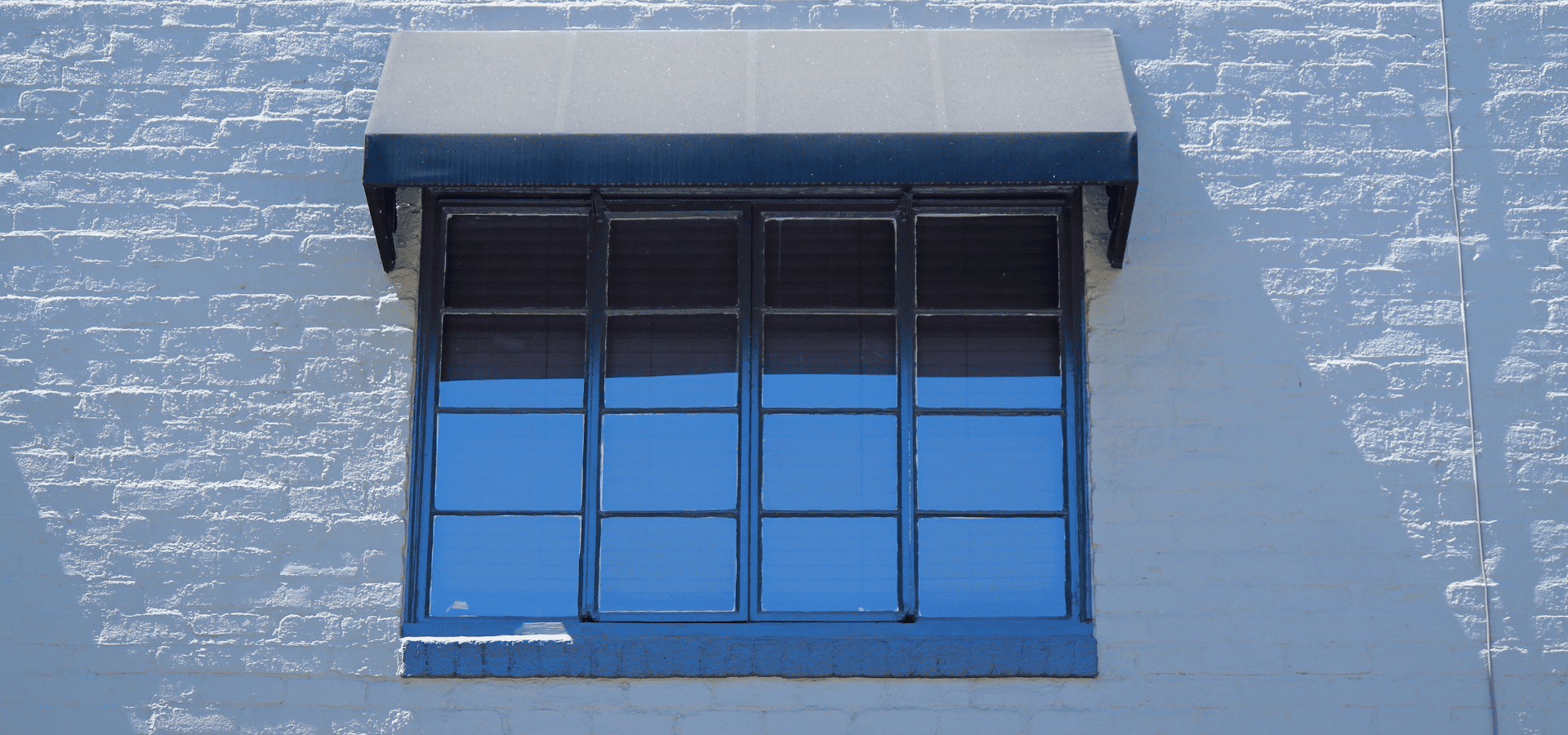
Small black stationary window awning that's only able to block some sunlight

The first type is the standard fixed awnings. Stationary or fixed awnings are just that — awnings that stay in place without moving.


They keep your home sheltered 24/7, 365 days a year. Stationary awnings can be made of heavier, tougher, and more rigid materials since there’s no need for them to bend, fold, or move in any way.


2. Retractable Awnings


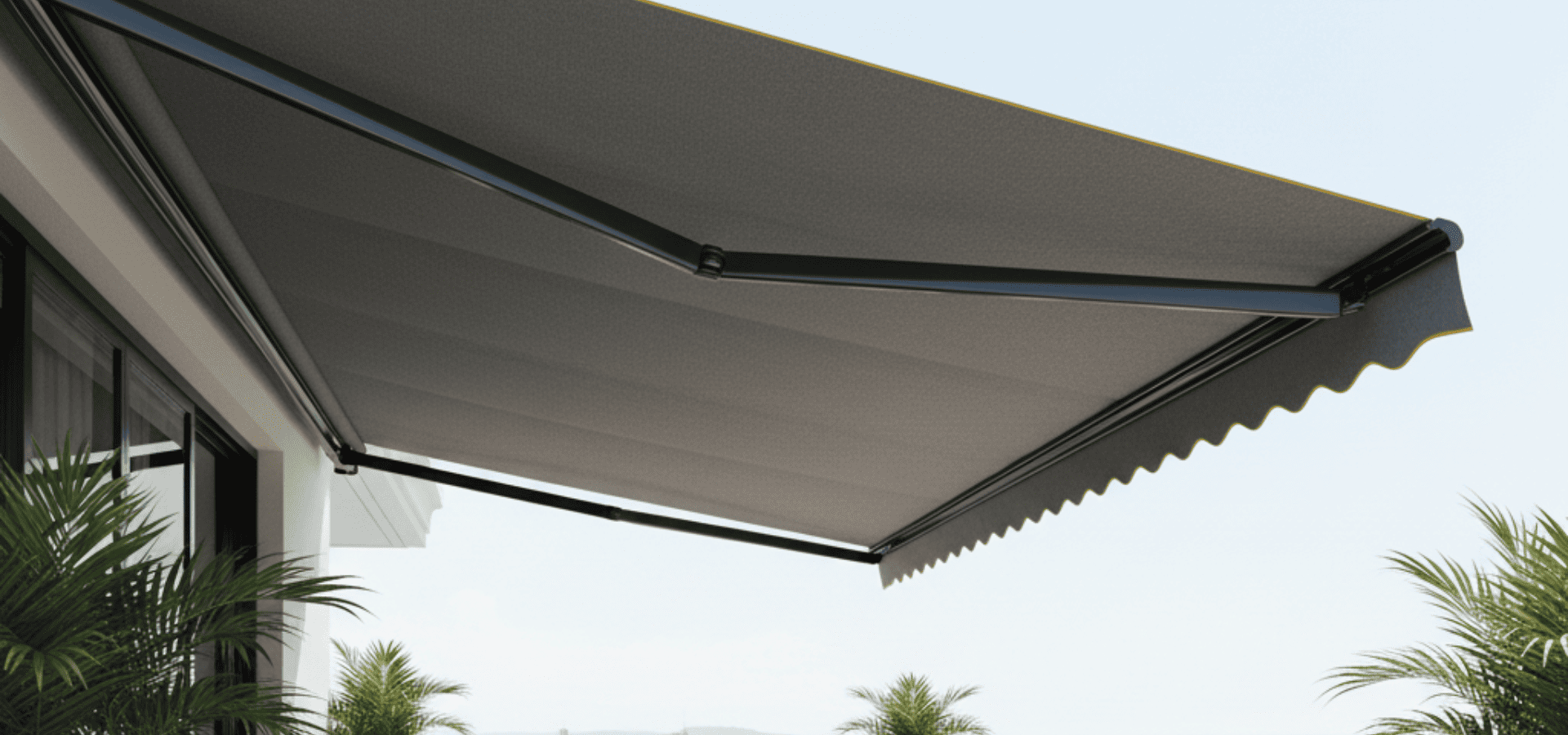
Next, retractable awnings are awnings that can be retracted and extended as needed. This makes them perfect for people who value flexibility to be able to control when and how much shade they want.


For example, on hot and sunny days, which is most days in Singapore, you’ll definitely want your window awning protecting your indoor furnishings and keeping the heat out.


But on more cloudy and windy days where the sun is mild and there’s less sunlight, a window awning that blocks out what sunlight there is can cause your indoor space to be a bit too dim.


At times like these, it’s nice to be able to retract the awning to brighten up your space.


There are both manual and motorised awnings, with each having its own pros and cons.


Manual awnings require more effort to extend and retract, but they’re also easier to maintain and less expensive to install and maintain.


Motorised awnings can be extended and retracted with a push of a button and are definitely more effortless to operate. But they’re also more pricey and can be harder to maintain.


With motorised awnings, with more moving parts, there are also more areas where things can go wrong, and repairs are also more complex and tend to cost more.


For example, if the power goes out, you can still extend your manual retractable awning when there’s a storm, but you can’t do so with motorised awnings since they operate on electricity.


For retractable awnings, unlike stationary awnings which can be made from a wide range of materials, retractable awnings are typically made with fabric.


This is just due to the nature of retractable awnings. They have to be able to bend and fold, and the only awning material that can do that is fabric.


As such, your material choice for retractable awnings will be limited to fabric, although that shouldn’t be an issue since fabric is extremely versatile and can come in just about any colour and design that you want.


3. Drop-Arm Awnings

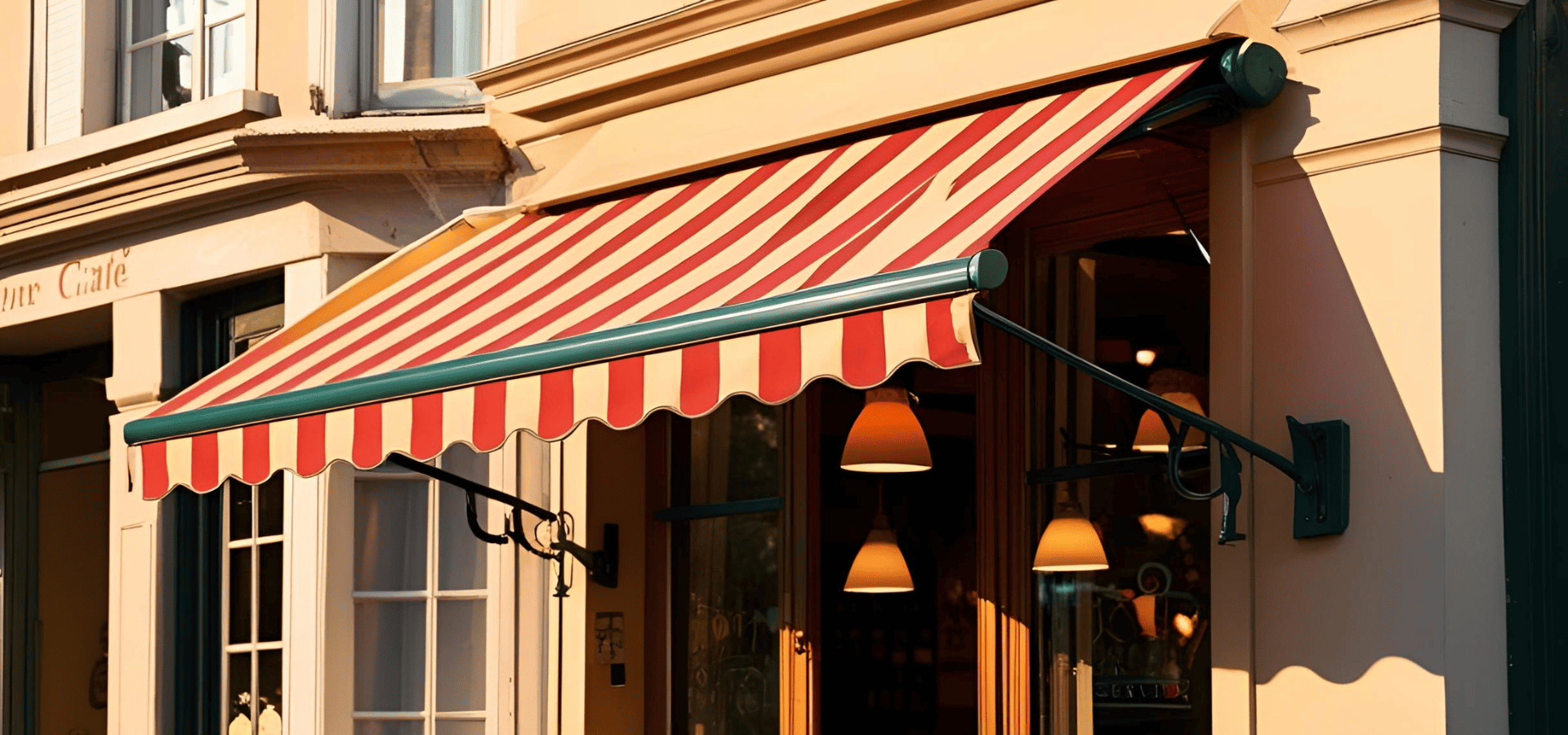
Red and white striped drop-arm awning over the entrance of a cafe

Drop-arm awnings feature arms that allow you to lower the awning as needed to block out the sun at various angles and times of the day.


Drop-arm awnings are a type of retractable awning, so they can be completely retracted as well.


The arms of drop-arm awnings are fixed in length, so how they work is that when fully retracted, the arms are pointing upwards. At this point, the awning is rolled up.


Then, to extend the awning, the arms slowly come downwards, slowly pulling the awning out while also pulling it to a lower angle as the arms come down.


So as you pull down the awning, not only does it slope downwards more and more, but it also slowly extends out to block more sunlight.


While retractable awnings and stationary awnings will be able to effectively keep UV rays and the heat out of your home most of the time, as the sun changes position throughout the day, there’s usually going to be a couple of hours in a day where your awning is at an angle that can’t block out the sun.


So if you want to be able to block out the sun as much as possible, you should go with drop-arm awnings that can be adjusted to block out the sun most of the time unless it’s very low on the horizon.


4. Dome/Bubble Awnings


Lastly, there are also dome and bubble awnings. You’ll almost never see these for regular awnings because they’re very limited in their coverage and won’t be able to provide enough shelter to practically function as shade for people.


However, they’re quite a unique feature, and if you have the right style of home, they can give your aesthetic appeal a nice boost.


Their limited coverage is enough for window awnings though. Of course, dome and bubble awnings will provide less shelter than other awning types, but they’ll still do a nice job of keeping your indoor furnishings safe most of the time and regulating your indoor temperature.


If you’re someone who values aesthetic appeal and is willing to sacrifice a little shelter for it, dome and bubble awnings could just be the awning type for you.


Window Awning Materials

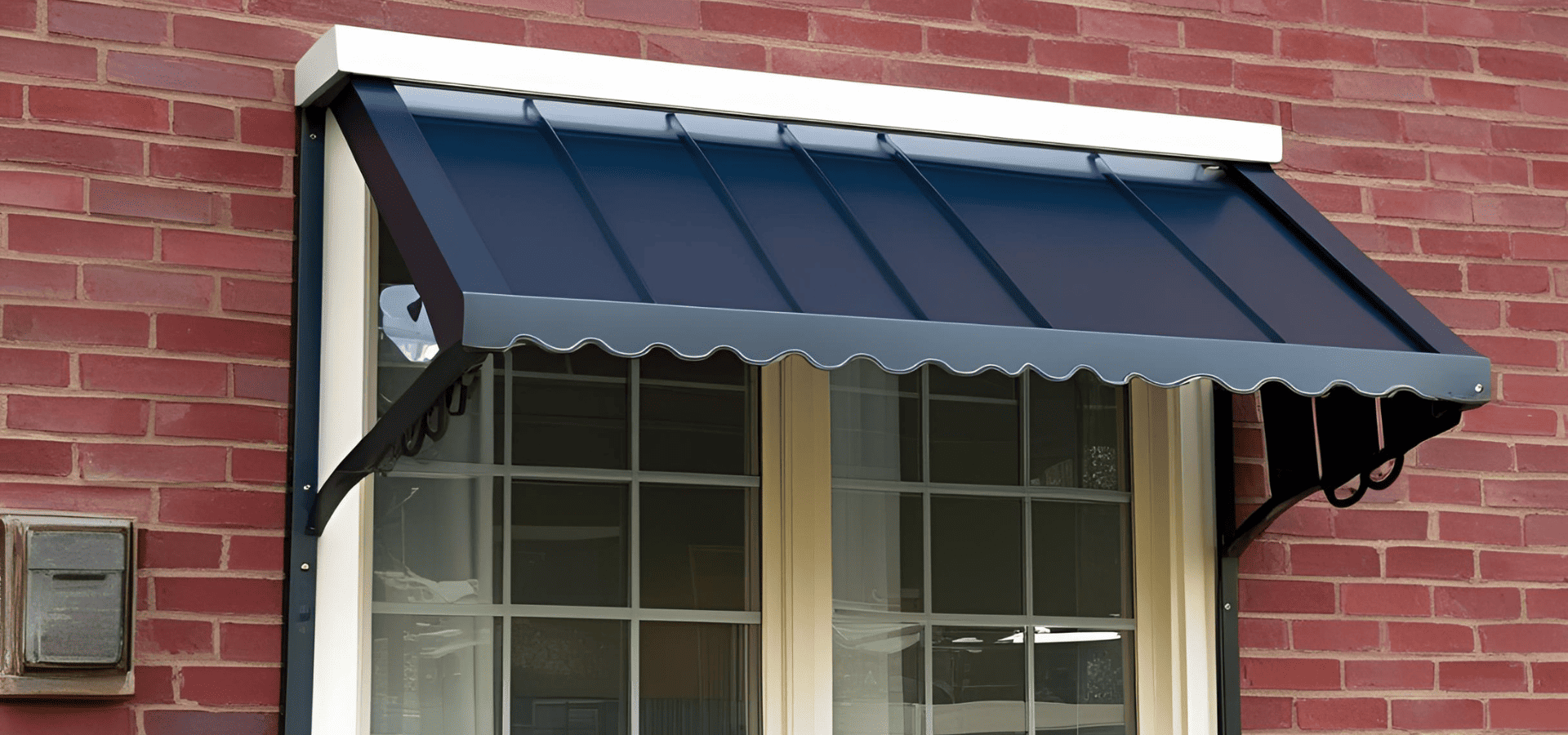
Sturdy fixed metal window awning on a brick house

Window awnings are still awnings, so they use the same materials as regular awnings. The point of window awnings is to keep UV rays out, so obviously you shouldn’t be using transparent glass or polycarbonate.


That isn’t to say you can’t use those materials, just don’t make them transparent. There are translucent and opaque options for both those materials, so go for those instead.


Here are the materials used for awnings:

  • Aluminium Composite
  • Polycarbonate
  • Glass
  • Metal
  • Fabric
  • Fibreglass


We won’t go into detail on their pros and cons since that would warrant a full article, so if you want to learn more, check out our
awnings types and materials article.


Should You Engage A Professional?


Hopefully, this article was enlightening. We went over what window awnings are, why they’re important, the different types, and the materials you can use for them, so by now, you should have a good understanding of window awnings.


If you’re ready to add a window awning to your house, you’ll need to decide whether to install it yourself or engage an awning professional to help you with it.


To be fair, awning installation isn’t rocket science, so you could tackle it on your own if you have the know-how and save some money.


But there are certain awnings that are more complex to install, like motorised retractable ones or heavier ones made of glass.


Depending on what level your windows are at, it can also be hard or dangerous to try to install it on your own if it’s too high.


With the element of danger and possibility of screwing up the installation, particularly for heavier or more complex installations, many Singaporean homeowners are happy to entrust it to trained professionals like
Uni Shades.


In short, if you’re looking to add a window awning to your home, remember to take into account the complexity, difficulty, and safety of the installation, and then decide whether it’s worth it to hire an awning contractor.

Luxury awning at a balcony in a three-storey home
December 1, 2025
There’s a particular moment in every Singaporean afternoon when the sunlight stops playing nice. It’s no longer “warm and golden”. Instead, it’s full throttle. The kind of heat that doesn’t just warm a patio but dares you to use it. And if you’ve invested in an outdoor space that’s meant to be lived in — not just gazed at through glass sliding doors — you’ll know that shade isn’t a convenience. It’s survival. But let’s not mistake basic shelter for sophistication. You’re not here to sling some discount canvas over your terrace and call it done. You’re here because you care about design, about durability, and about solutions that feel as good as they look. You’re here for luxury. And not the performative kind — the thoughtful, quiet, actually-works-for-you kind. So, what does luxury look like in the world of awnings? Not in catalogue-speak. In real-world, weather-tested, daily-use terms? Let’s stretch this out. It’s Not Just Shade. It’s Infrastructure. Here’s the thing most people miss: a luxury awning isn’t just a fancy sunshade. It’s an architectural element. It shapes how you live in your space. It’s not just about where the light lands, but where you eat, relax, and gather. Done well, it expands your home’s footprint in a way that feels natural. Done poorly, it sticks out like an afterthought while tanking the usability of your outdoor space. In Singapore, where the weather is a full-time participant in your day, that usability matters more than ever. That’s why a “luxury” awning isn’t about gimmicks… A luxury awning is about fit. Form. Function. Fabric that holds its own under equatorial UV. Motors that retract silently and don’t throw tantrums after a monsoon. Mountings that still look sharp in year ten, not just month three. You’re not just buying a product when you buy a luxury awning. You’re investing in how your space feels and flows, now and into the future. Why Going Premium Makes Sense Here (Even If You’re Not A “Luxury” Buyer)
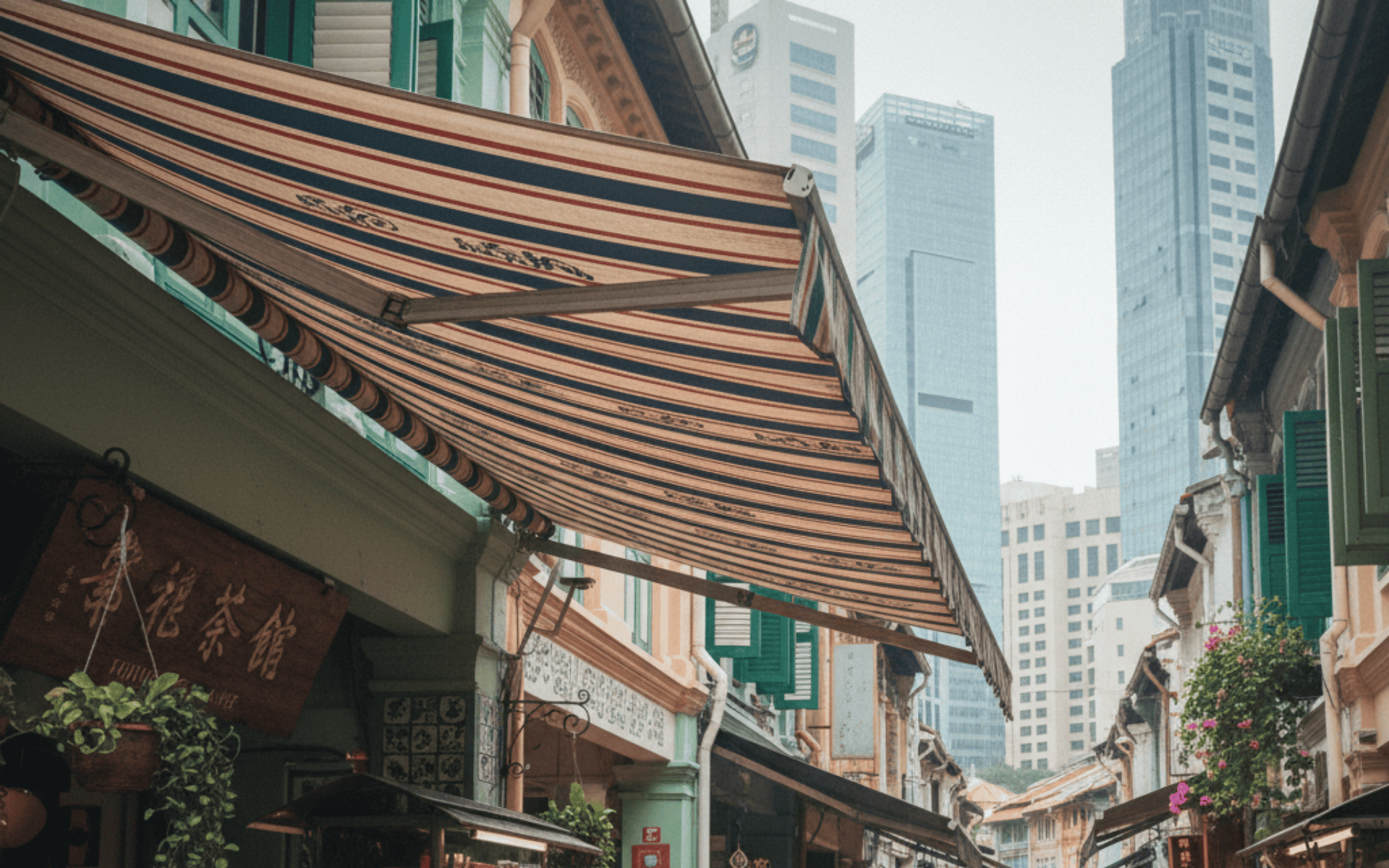
Retractable commercial awning in Chinatown Singapore
November 15, 2025
There’s something quietly transformative about an awning . One moment you’ve got an exposed patio or a shopfront baking in the Singaporean sun; the next, with a simple extension of fabric and frame, you’ve created a shaded retreat that feels worlds cooler. It might not be a new invention… But it is a redefined modern moment, all thanks to the humble awning’s mix of style, comfort, and energy-saving smarts. Still, for all their familiarity, a surprising number of people aren’t quite sure what counts as an “awning.” Is it just a canvas sheet? A fancy pergola? Something that only belongs above café terraces in Europe? In reality, awnings are a category of shade structure with a long history and an impressive amount of variation. They’re also particularly relevant in Singapore, where tropical sun and sudden downpours make adaptable shelter more a necessity than a luxury item. So let’s strip it back. What exactly is an awning, what options are out there, and why do people seem to love them so much? The Core Idea At its simplest, an awning is a secondary covering attached to the exterior wall of a building. Its purpose is straightforward… Provide shade and weather protection. That’s it. Most awnings stretch out horizontally, projecting over windows, doors, patios, or storefronts. They can be fixed in place, manually extended, or fully motorised with sensors and remote controls. The big difference between an awning and, say, a roof extension is mobility and scale. Awnings are generally lighter, designed for flexible use, and not meant to replace your actual roof. They’re an accessory, but one with teeth — easily capable of changing how a space feels and functions almost instantly. Awnings In Everyday Life